

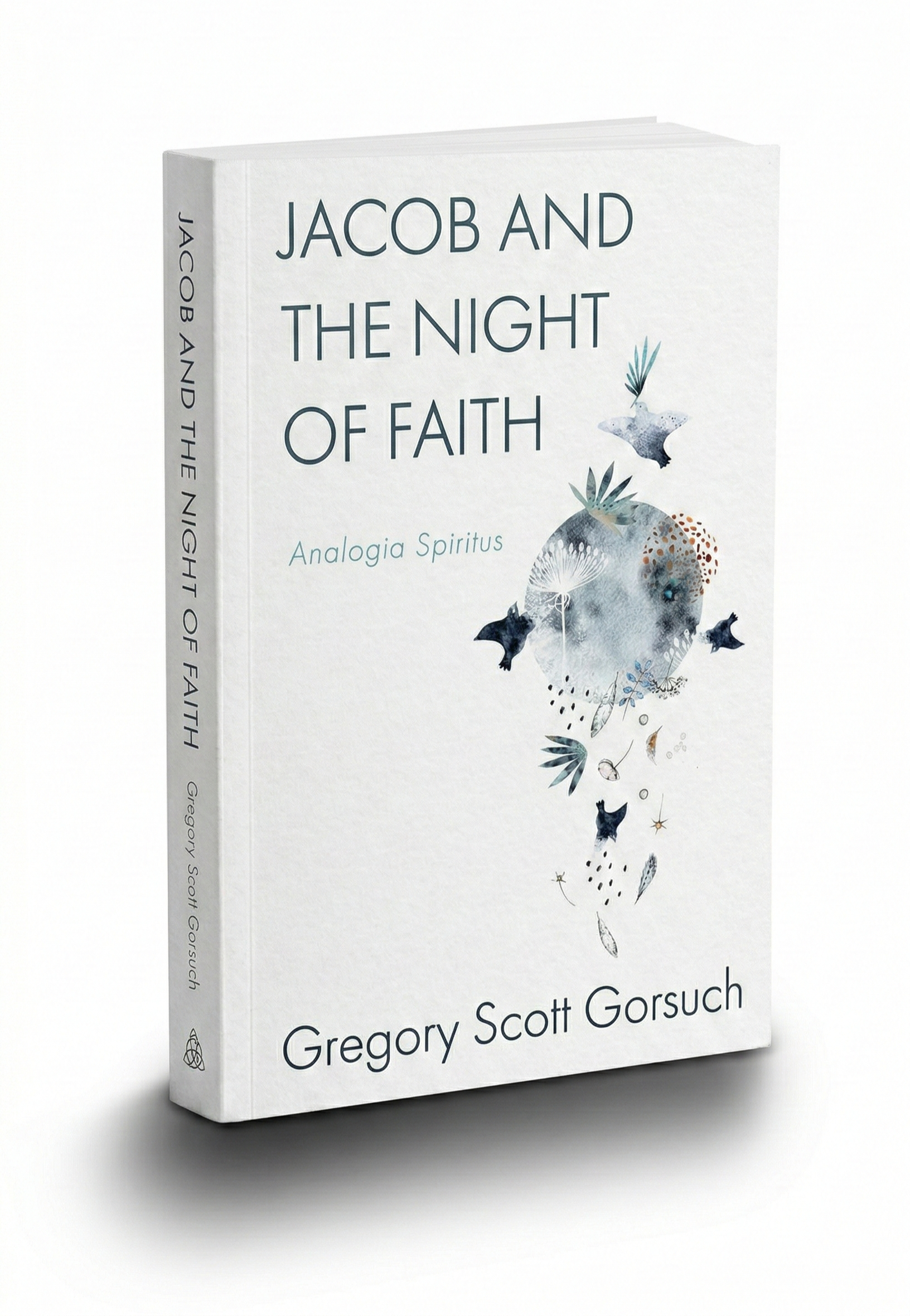
In retrospect, Karl Barth conceded that “everything which needs to be said, considered, and believed about God the Father and God the Son . . . might be shown and illuminated in its foundation through God the Holy Spirit.” Nevertheless, he refrained from doing so because it was “still too difficult to distinguish between God’s Spirit and man’s spirit,” and so it was—then. However, the late-twentieth-century explosion across various disciplines of thought now provides greater discernment between human and divine spirit, a better understanding of the logic of spirit, and a clearer concept and role of spirit in distinction from mind and body.
Gorsuch’s theological interdisciplinary investigation into the analogia spiritus and a Christian perichoretic relational ontology brings new meaning and coherence to previously difficult scriptures. Moreover, it provides the fundamental landscape for addressing issues of profound theological consequence: (1) redressing the death of transcendence with a new understanding of relational dynamics through which free, temporal, and self-determining human beings might mutually relate with an Eternal God of providence; (2) laying the framework for a viable Christian pluralistic hypothesis in an increasingly pluralistic world; and (3) providing an enriched theological anthropology for addressing human spirit, origins, and theodicy.

ENDORSEMENTS
Comments below are from the book’s source,
a PhD dissertation originally titled:
Coming Soon
Why does God lift Jacob into preeminence in the same manner as Jesus does with Peter in the New Covenant? Why are these the only two in Scripture to receive complete name changes from God? And why the common theme of “rocks”? Coincidence? No — this is actually a game-changer.
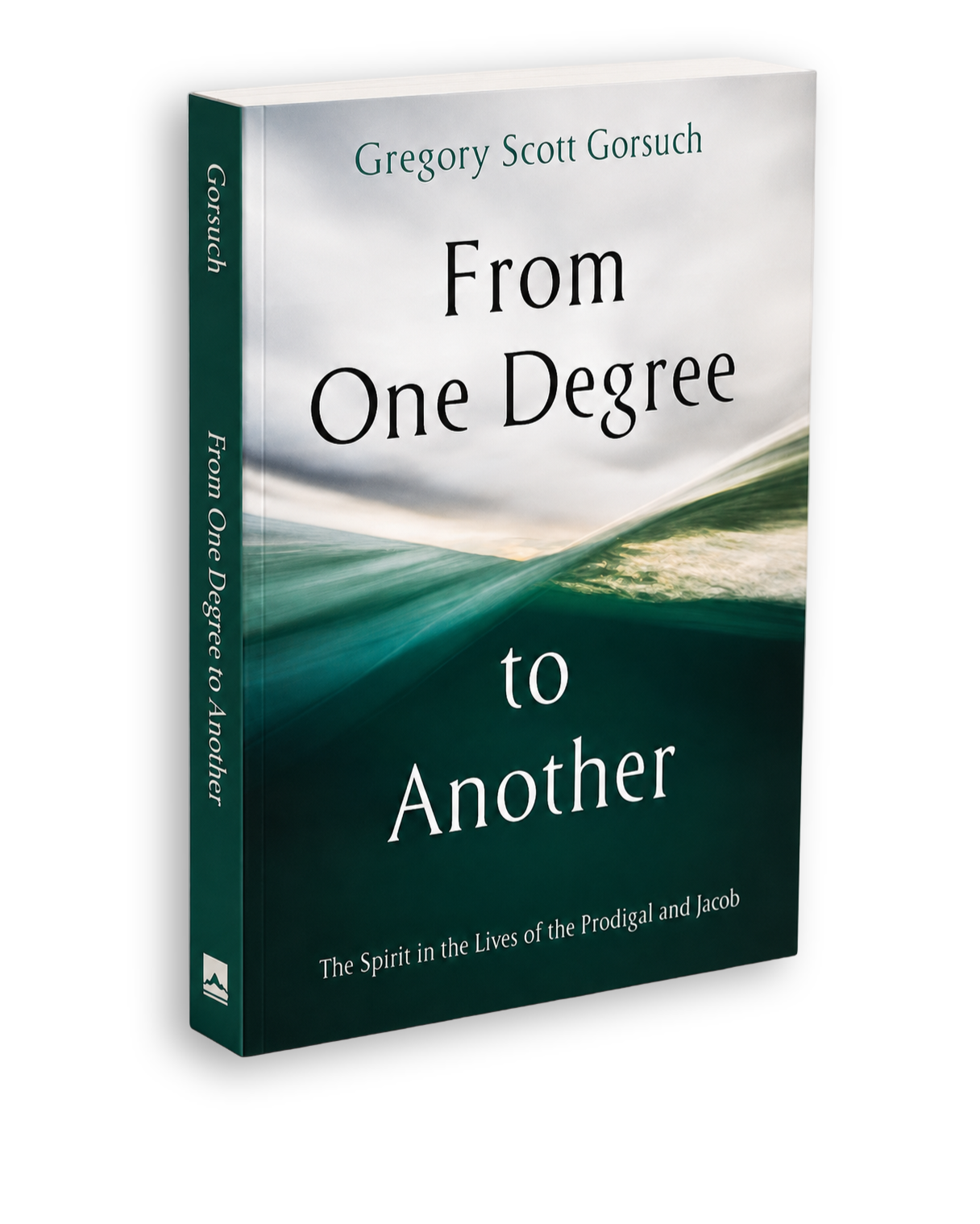
Gorsuch’s new book tackles Jesus’ most difficult sayings while explaining the true depth of the stories of Jacob and the Prodigal Son — not only revealing greater coherence in the Scriptures but explaining how the human spirit grows in interactive, perichoretic individuation from one degree to another. What emerges is a relational ontology that transforms our conventional understanding of morality and metaphysics, revealing that all genuine faith, as expressed in the passion of Jacob and Peter, emerges from a holistic pre-cognitive, pre-temporal co-conditioning interaction that allows Jesus to say, “your faith [with me] has made you well.”
From One Degree To Another unlocks the mysteries of human freedom and divine providence, the problem of evil, and the ways the Trinity moves redemptively both within and beyond Christianity.

ESSAYS

This essay investigates Bonhoeffer’s undeveloped concept of “Unconscious Christianity” and how a protracted understanding of his religionless Christianity in a culture “come of age” points to a viable Christian pluralistic hypothesis—how Christ and the Spirit are redemptively active outside the church. Bonhoeffer’s living faith action transcends his theology, revealing unconscious dynamics within our interactions that reveal antecedent relational dynamics that open to the redemptive process, which transcend but do not obviate the cognitive elements of faith. New scriptural themes and concepts of relationality and perichoretic metaphysics bring greater biblical coherence and meaning to one particular biblical passage that has apparently remained meaningless (Matt 12:32). This new meaning and coherence within the scriptures radically alter Christianity’s relationship to the outside world and transforms our understanding of the Great Commission.

The use of perichoresis by Miroslav Volf (1998) and others spring from significant themes within the Scriptures, most notably from Christ's prayer that anticipates transforming the divine-human relationship into a filial and like nature to that of the Trinity: 'I pray ... that they all may be one, as You, Father, are in Me, and I in You; in order that they may be one in us' (John 17:21). This predicates mutuality, not in the divine ‘transcendence into the substance of being,’ but on the shared character of relationality, perichoresis, experienced within the immanent Trinity and progressively reflected within human social relations. Alternatively, Karen Kilby concludes that any consideration of perichoresis outside of expressing the mystery of relations within the immanent Trinity is problematic, ultimately only mirroring human social relations. This essay argues that noticeable reflections of perichoresis are increasingly observable in social relations and emerging across various disciplines of thought that then bring greater coherence and meaning to the Scriptures, theology, and the faith community. Applying a perichoretic ontology, this essay will reveal new and significant meaning in many passages, most notably in Matthew 12:32 (which is otherwise considered meaningless). If a perichoretic ontology subsequently transforms our understanding of Christ's redemptive action in the world and promises to resolve many historically persistent theological anomalies, the notion of perichoresis must continue to rise within the theological project.
If humans are created in the image of a trinitarian God, then we might consider that the fundamental ontology of humans would be relational, furthermore, to some degree, perichoretic (Gunton). If perichoresis is somehow reflected in human relations (notwithstanding all Creation), it should be evident analogically in our social relations, theology, and various disciplines of thought. This relational concept of the Church Fathers failed to be further developed because the doctrine of the Trinity fell out of theological focus over the centuries. Today, subtle but radical changes are occurring in the field of social psychology and communications theory. Whereas it was once common for modern paradigms to dominate the field, social constructionists have begun to react against the preponderance of typically modern themes, as the primacy of the subject or ontological discourse was framed exclusively in the language of subject-subject. On the other hand, their work offers a unique opportunity for Christian theology to expand its understanding of perichoresis. For Kierkegaard, the relationship itself becomes a positive third term that intensifies the polarities and therefore suggests an alternative tripartite consideration: subject-relationship-subject. From this tripartite relational structure of humanity as differentiated-unity, I am positioned to develop a logic of spirit and explore the possibility of analogia spiritus—the non-reflexive transformational dynamic that facilitates holistic change and meaning—as the essential dynamic within perichoresis. This, in turn, reveals that this dynamic, active as human spirit, can be holistically and analogically correlated in mutual co-conditioning reciprocity with the Trinity and the Eternal activity of the Spirit and Christ.